
Anticoagulation in atrial fibrillation have come a long way as Dr. Georg Nickenig shares treatment options for patients undergoing and post-PCI. The 2018 ESC expert consensus recommends discharging patients on triple therapy or dual therapy on concerns of thromboembolic events or bleeding risks respectively. Here, Dr. Georg Nickenig shares imperative evidences from recent studies that show a shift towards dual therapy post PCI/post ACS in patients with NVAF.

Cardiovascular
 RECIRCUIT: Uninterrupted Anticoagulation with Dabigatran in Catheter Ablation
The RE-CIRCUIT trial provides insights on the safety profile of uninterrupted dabigatran compared to uninterrupted warfarin in nonvalvular atrial fibrillation (NVAF) patients undergoing catheter ablation.
 RE-DUAL PCI : Safety and Efficacy of Two Regimens of Dual Therapy with Dabigatran without ASA
Dr. Dominick Angiolillo opines that AF patients undergoing PCI need protection from stroke. He shares the results of RE-DUAL PCI trial comparing dabigatran dual therapy versus warfarin triple therapy, to help physicians make better informed choices and minimize the risk of bleeding and mortality.
 RE-DUAL PCI: Subgroup Analysis on baseline PPI use in post PCI
Use of PPI to reduce the risk of bleeding can affect the absorption of other drugs post PCI in patients with atrial fibrillation. The RE-DUAL PCI sub-analysis provides insights of the impact of baseline PPI on safety endpoints when tested with both the doses of dabigatran versus triple therapy.
 RE-DUAL PCI: Triple and Dual Antithrombotic Therapy Post PCI
Triple antithrombotic therapy with warfarin is the standard of care in AF patients undergoing PCI, but this is associated with a high risk of bleeding. RE-DUAL PCI study compared trial triple therapy with warfarin and dual therapy with dabigatran post-PCI in patients with AF. Some important differences observed in primary and secondary end points have been shown here.
 RE-DUAL PCI, ESC 2017: Q&A with Dr. Christopher Cannon
This Q&A with Dr. Christopher P. Cannon discusses relevant implications of the RE-DUAL PCI study results in considering dual therapy with dabigatran and triple therapy with warfarin in managing AF patients post PCI.
 Setting New Standards for Patients with AF - Anticoagulation Academy 2019 Barcelona Q&A
This Q&A deals with setting new standards for patients with AF - AC 2019 Barcelona with the panel Dr. Marc Brouwer, Dr. Elaine Hylek, Dr. Georg Nickenig and Dr. Todd Villnes along with hosts Dr. John Eikelboom and Dr. Harry Buller.
 Setting New Standards for Patients in AF - Anticoagulation Academy 2019 Barcelona - RE-CIRCUIT
Dr. Marc Brouwer takes on the clinical data of uninterrupted dabigatran versus warfarin in periprocedural AF ablation from the RE-CIRCUIT trial and goes on to compare with the results from VENTURE-AF, AXAFA-AFNET 5 trial using other NOACs. He also shares the current guidance for the management of bleeding and cardiac tamponade from anticoagulation therapy.
'50 countries, 5 regions, 2200 sites': GLORIA AF – one of the largest prospective RWE study, and provides long term comparative real-world outcomes of oral anticoagulants for AF.

Cardiovascular
 Safety Validation of Dabigatran through RWE
The safety profile of dabigatran is built on evidences from RCTs and comprehensive data from real-world studies; together these provide information to the medical practitioners about its safety compared to VKAs and other NOACs.
 Dabigatran Clinical Trials to Real World Evidence
Results from RCTs strengthened by real-world evidences can immensely support clinical decision making. The safety and efficacy of dabigatran is studied in a broad patient population across different clinical settings.
 Complimentary Role of Phase 3 data and Dabigatran RWE by Gregory Lip
Professor Gregory Lip compares the approach behind conducting randomized clinical trials and real-world studies for medical intervention. He also elaborates on how real-world evidence on dabigatran therapy has provided supportive and complimentary data to RCTs and contributed to improved patient outcomes.
DOACs carry a risk of bleeding as with all antithrombotic therapies. A humanized monoclonal antibody was developed to reverse dabigatran anticoagulant effects in rare emergency situations. Let us see the mechanism of action of this antidote, idarucizumab.

Cardiovascular
 Role of Idarucizumab in Neuro-Thrombolysis
Prof. Dr. med. Martin Grond provides a neurologist’s perspective on the reversibility of NOAC therapies and in specific about reversing dabigatran anticoagulant effects using idarucizumab in life threatening emergency situations like ischemic stroke and ICH, based on a retrospective study and real-world experience.
 Episode 1: Reversibility from a Neurologist’s Perspective, Prof Martin Grond
Prof. Dr. med. Martin Grond provides a neurologist’s perspective on the reversibility of NOAC therapies and in specific about reversing dabigatran anticoagulant effects using idarucizumab in life threatening emergency situations like ischemic stroke and ICH, based on a retrospective study and real-world experience.
 Episode 2: Reversibility from a Neurologist’s Perspective, Prof Martin Grond
Prof. Dr. med. Martin Grond provides a neurologist’s perspective on the reversibility of NOAC therapies and in specific about reversing dabigatran anticoagulant effects using idarucizumab in life threatening emergency situations like ischemic stroke and ICH, based on a retrospective study and real-world experience.
 Episode 3: Reversibility from a Neurologist’s Perspective, Prof Martin Grond
Prof. Dr. med. Martin Grond provides a neurologist’s perspective on the reversibility of NOAC therapies and in specific about reversing dabigatran anticoagulant effects using idarucizumab in life threatening emergency situations like ischemic stroke and ICH, based on a retrospective study and real-world experience.
 Episode 4: Reversibility from a Neurologist’s Perspective, Prof Martin Grond
Prof. Dr. med. Martin Grond provides a neurologist’s perspective on the reversibility of NOAC therapies and in specific about reversing dabigatran anticoagulant effects using idarucizumab in life threatening emergency situations like ischemic stroke and ICH, based on a retrospective study and real-world experience.
 Episode 6: Reversibility from a Neurologist’s Perspective, Prof Martin Grond
Prof. Dr. med. Martin Grond provides a neurologist’s perspective on the reversibility of NOAC therapies and in specific about reversing dabigatran anticoagulant effects using idarucizumab in life threatening emergency situations like ischemic stroke and ICH, based on a retrospective study and real-world experience.
 Episode 1: Reversibility from a Cardiologist’s Perspective, Prof Tomaszuk-Kazberuk
Use of direct oral anticoagulants has bridged the need for effective anticoagulation in patients with atrial fibrillation. Professor Anna Tomaszuk-Kazberuk throws light on the efficacy and safety of direct oral anticoagulants and use of idarucizumab to reverse their anticoagulant effect, when needed.
 Episode 2: Reversibility from a Cardiologist’s Perspective, Prof Tomaszuk-Kazberuk
Professor Anna Tomaszuk-Kazberuk discusses a case where cardiac surgeons initially refused to operate a patient on anticoagulant treatment and how idarucizumab has paved the way for proceeding with the contemplated procedure.
 Episode 3: Reversibility from a Cardiologist’s Perspective, Prof Tomaszuk-Kazberuk
Professor Anna Tomaszuk-Kazberuk elaborates on how the use of idarucizumab changed the opinion of cardiac surgeons from withholding an emergency procedure for an imminent life-threatening condition to performing the same, while the patient was on dabigatran.
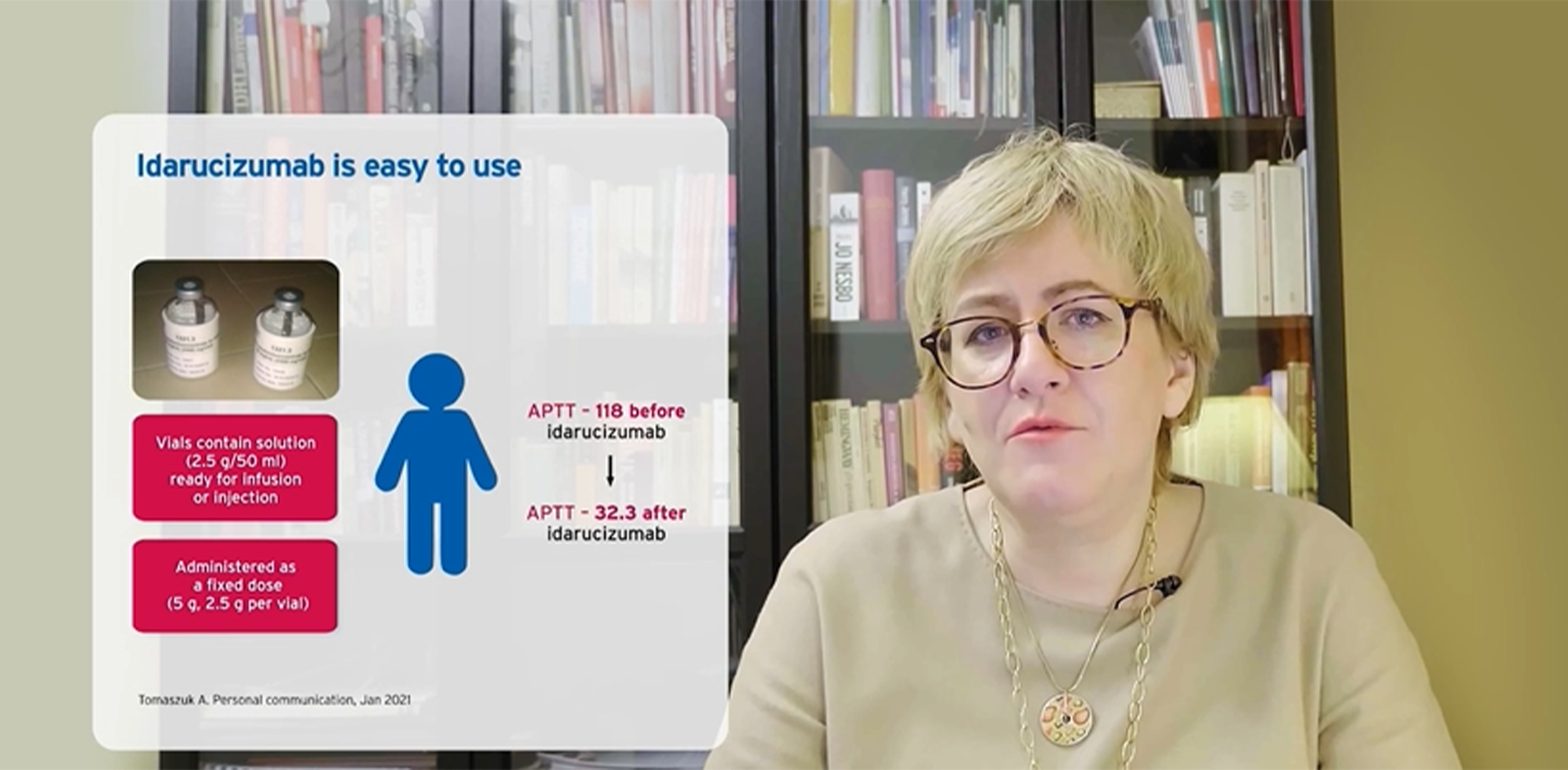 Episode 4: Reversibility from a Cardiologist’s Perspective, Prof Tomaszuk-Kazberuk
An elderly lady who had previous stroke and maintained on dabigatran had massive bleeding from her genital tract, as seen by her gynecologist. Professor Anna Tomaszuk-Kazberuk tells us how idarucizumab served as her rescue drug.
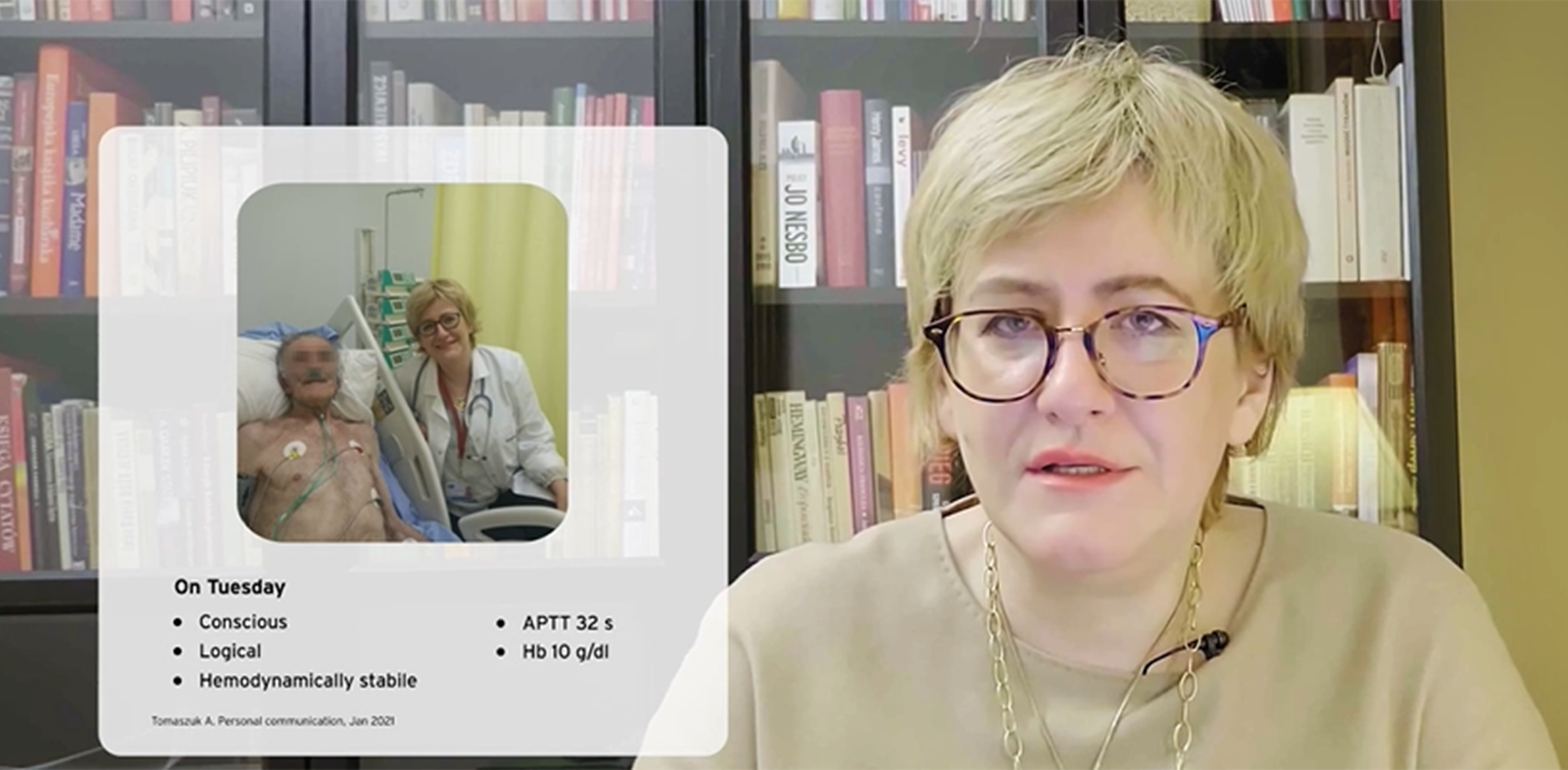 Episode 5: Reversibility from a Cardiologist’s Perspective, Prof Tomaszuk-Kazberuk
There are circumstances that may need for emergency reversal of anticoagulation in order to save lives of patients. Professor Anna Tomaszuk-Kazberuk deliberates on the use of idarucizumab by citing different clinical scenarios which were successfully managed with administration of idarucizumab based on her clinical experience.